

Dr. Vishnu Agrawal
Published on March 14, 2026
Best Treatment Options for Kidney Stones: A Detailed Guide | Dr. Vishnu Agrawal
Best Treatment Options for Kidney Stones – A Complete Guide by Dr. Vishnu Agrawal
Kidney stones are a common urological condition that affects millions of people worldwide. These hard deposits form in the kidneys when minerals and salts crystallize and stick together. Kidney stones can vary in size—from tiny grains to larger stones that can block the urinary tract. While some stones pass naturally without treatment, others may cause severe pain and require medical intervention.
Understanding the best treatment options for kidney stones can help patients manage their condition effectively and prevent future complications.
What Are Kidney Stones?
Kidney stones are solid masses made of crystals that develop in the kidneys. They are typically formed when urine contains high levels of substances such as calcium, oxalate, or uric acid and lacks enough fluids to dilute them.
When these substances accumulate, they begin to form crystals that gradually grow into stones. These stones can remain in the kidneys or travel through the urinary tract.
Common Symptoms of Kidney Stones
The symptoms of kidney stones can vary depending on the size and location of the stone. Some small stones may not cause noticeable symptoms, but larger stones can cause intense discomfort.
Common symptoms include:
- Severe pain in the back or side
- Pain that spreads to the lower abdomen or groin
- Pain during urination
- Blood in the urine
- Frequent urge to urinate
- Nausea or vomiting
- Cloudy or foul-smelling urine
If you experience severe pain or difficulty urinating, it is important to seek medical attention immediately.
Causes of Kidney Stones
Several factors can increase the risk of developing kidney stones. Some of the most common causes include:
- Dehydration or low fluid intake
- High consumption of salt and processed foods
- Diets high in oxalate-rich foods
- Obesity
- Family history of kidney stones
- Certain medical conditions such as gout or urinary tract infections
Understanding the underlying cause helps doctors determine the most effective treatment approach.
Best Treatment Options for Kidney Stones
The treatment of kidney stones depends on factors such as the size of the stone, its location, and the severity of symptoms. Some stones pass naturally, while others require medical or surgical treatment.
1. Drinking Plenty of Fluids
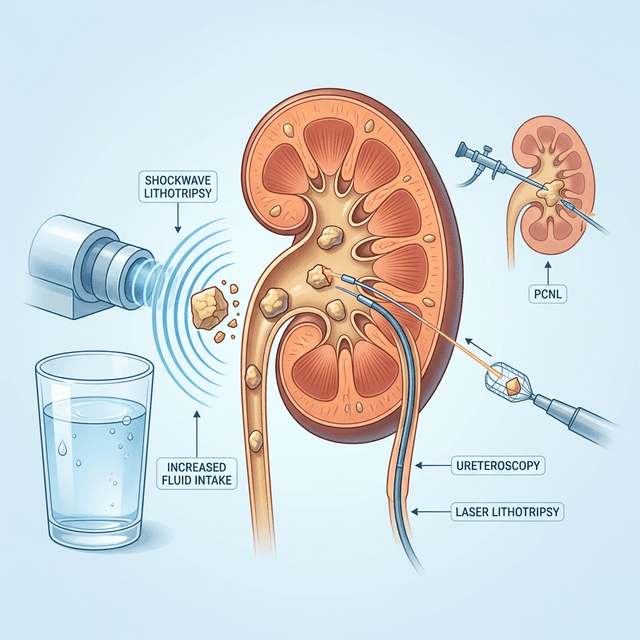
For small kidney stones, increasing fluid intake is often the first recommended treatment. Drinking enough water helps flush out the urinary system and allows small stones to pass naturally.
Doctors usually recommend drinking 2 to 3 liters of water per day. This helps dilute the urine and prevents the formation of new stones.
2. Pain Management
Passing a kidney stone can be painful. Doctors may prescribe pain-relieving medications to help manage discomfort while the stone passes through the urinary tract.
Common medications include:
- Nonsteroidal anti-inflammatory drugs (NSAIDs)
- Prescription pain relievers
- Antispasmodic medications
These medications help reduce pain and relax the muscles in the urinary tract.
3. Medications to Help Pass Stones
Certain medications can help relax the ureter (the tube connecting the kidney to the bladder), making it easier for the stone to pass. These medications are known as alpha blockers and can help speed up the process of stone passage while reducing discomfort.
4. Extracorporeal Shock Wave Lithotripsy (ESWL)
Extracorporeal Shock Wave Lithotripsy is one of the most commonly used treatments for kidney stones. This non-invasive procedure uses shock waves to break large stones into smaller pieces so they can pass through the urinary tract more easily.
Benefits of ESWL include:
- No surgical incision
- Short recovery time
- Effective for medium-sized kidney stones
However, multiple sessions may sometimes be required to completely break down the stones.
5. Ureteroscopy
Ureteroscopy is a minimally invasive procedure used to remove stones located in the ureter or kidney. During this procedure, a thin scope is inserted through the urethra and bladder into the ureter. The doctor can either remove the stone directly or break it into smaller pieces using a laser.
Advantages of ureteroscopy include:
- High success rate
- No external incision
- Suitable for stones that cannot pass naturally
Patients usually recover quickly after the procedure.
6. Percutaneous Nephrolithotomy (PCNL)
For very large kidney stones, a surgical procedure called Percutaneous Nephrolithotomy may be recommended. In this procedure, a small incision is made in the back to access the kidney and remove the stone.
PCNL is typically used for:
- Large kidney stones
- Complex stones
- Stones that cannot be treated with other methods
Although it is a more invasive procedure, it is highly effective for removing large stones.
Preventing Kidney Stones
Preventing kidney stones is often easier than treating them. Making certain lifestyle and dietary changes can significantly reduce the risk of stone formation.
Here are some effective prevention tips:
- Stay Hydrated: Drinking plenty of water throughout the day is the most important step in preventing kidney stones.
- Reduce Salt Intake: High sodium levels in the diet can increase calcium levels in urine, which can contribute to stone formation.
- Maintain a Balanced Diet: A healthy diet that includes fruits, vegetables, and adequate calcium intake can help prevent kidney stones.
- Limit Oxalate-Rich Foods: Certain foods such as spinach, nuts, and chocolate contain oxalates that may contribute to stone formation in some individuals.
- Maintain a Healthy Weight: Obesity is associated with a higher risk of kidney stones. Maintaining a healthy weight through regular exercise and balanced nutrition can help reduce this risk.
When to See a Urologist
While small kidney stones may pass naturally, medical attention is necessary if you experience:
- Severe or persistent pain
- Difficulty passing urine
- Blood in the urine
- Fever or chills
- Nausea and vomiting
A urologist can diagnose the condition using imaging tests such as ultrasound or CT scans and recommend the most appropriate treatment.
Conclusion
Kidney stones can be extremely painful, but effective treatments are available to manage and remove them. From increased fluid intake and medications to advanced procedures like lithotripsy and minimally invasive surgery, treatment options have significantly improved in recent years. If you suspect you have kidney stones, consult a qualified urologist for an accurate diagnosis and personalized treatment plan.

